
Why Is My Urine Stream Weak? Causes and When to Worry
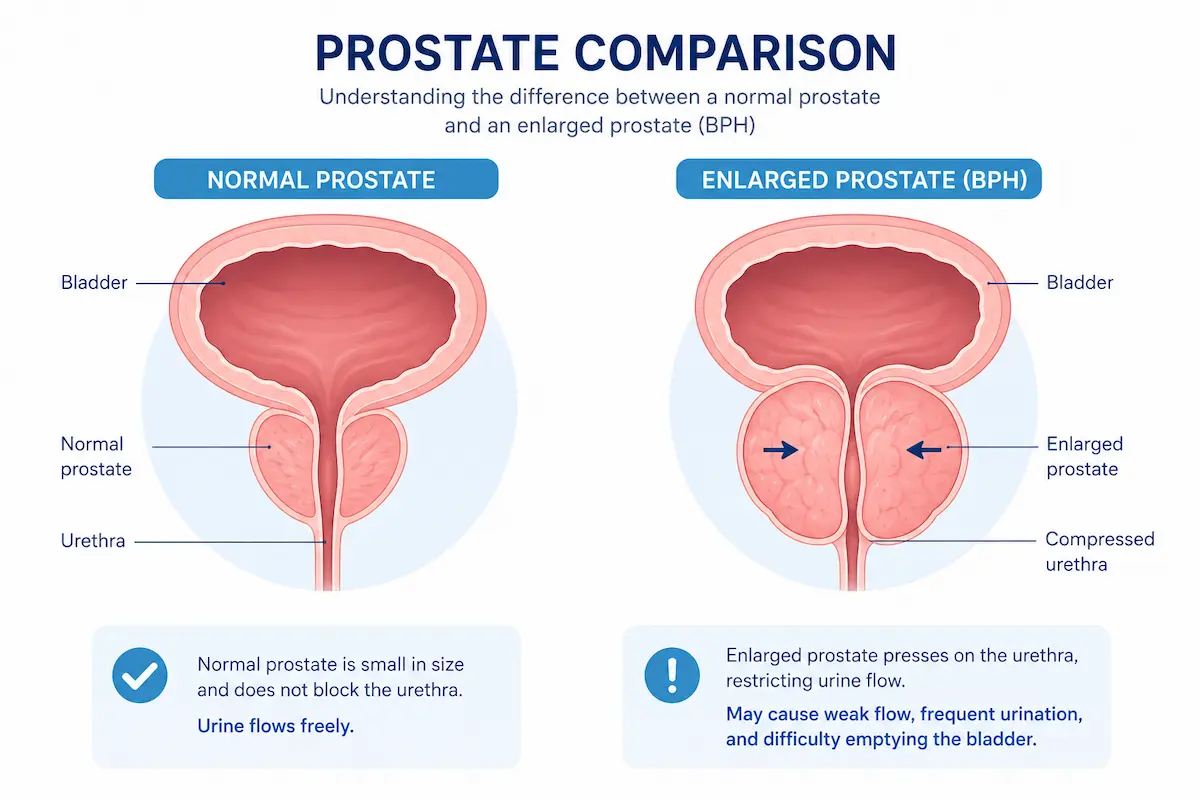
Why Is My Urine Stream Weak? If your urine stream has become weaker, slower, or harder to start, there can be several possible explanations. An enlarged prostate (BPH) is one common cause in older men, but urinary infections, urethral narrowing, certain medications, bladder problems, and nerve-related conditions can also affect urine flow.
A weak urine stream is often gradual, but a sudden change, blood in the urine, painful urination, fever, or an inability to urinate should not be ignored. In this guide, we’ll explain the most common causes of a weak urine stream, related symptoms to watch for, when to seek medical care, and practical steps that may help depending on the underlying cause.
Affiliate Disclosure: This article contains affiliate links. If you make a purchase through one of our links, we may earn a commission at no extra cost to you.
Contents
- 1 What Is Considered a Weak Urine Stream?
- 2 Why Is My Urine Stream Weak? The Most Common Causes
- 3 Weak Urine Stream in the Morning: Is That Normal?
- 4 Could a Weak Urine Stream Be a Prostate Problem?
- 5 Does a Weak Urine Stream Mean Prostate Cancer?
- 6 When Should I Worry About a Weak Urine Stream?
- 7 How to Support Healthy Urine Flow
- 8 FAQ: Why Is My Urine Stream Weak?
- 8.1 1. Why is my urine stream weak all of a sudden?
- 8.2 2. Is a weak urine stream always related to the prostate?
- 8.3 3. Can a weak urine stream get better on its own?
- 8.4 4. What is considered a weak urine stream versus normal aging?
- 8.5 5. Should I see a doctor for a weak urine stream?
- 8.6 6. Can a weak urine stream be caused by a UTI?
- 8.7 7. Why does my urine stream start and stop?
- 8.8 8. Can medications cause a weak urine stream?
- 8.9 9. Can a weak urine stream be a sign of an enlarged prostate?
- 8.10 10. Can a weak urine stream be normal as you get older?
- 9 Final Verdict
What Is Considered a Weak Urine Stream?
Before diving into causes, it helps to know what “weak” actually means in this context. A healthy urine stream should start quickly, flow steadily without much effort, and finish in a reasonably short, continuous burst. If you’re dealing with a weak urine stream, you might notice one or more of these signs:
- It takes longer than usual for urine to start flowing
- The stream is noticeably thinner or less forceful than it used to be
- You need to strain or push to keep the flow going
- The stream stops and starts instead of flowing continuously
- It takes longer than normal to fully empty your bladder
If any of this sounds familiar, you’re dealing with what doctors often refer to as a weak or weakened urine stream — and it’s worth understanding what’s behind it.
Why Is My Urine Stream Weak? The Most Common Causes
There isn’t a single answer to why is my urine stream weak — for most men, it comes down to one (or a combination) of these underlying factors:
1. An Enlarged Prostate (BPH)
Why Is My Urine Stream Weak? One of the most common causes of urinary symptoms in older men is an enlarged prostate, medically known as benign prostatic hyperplasia (BPH). As the prostate grows, it can press against the urethra and restrict the flow of urine.
BPH can cause a weak or interrupted stream, difficulty starting urination, dribbling, a feeling of incomplete bladder emptying, and the need to urinate more often, including during the night.
Importantly, the size of the prostate does not always match the severity of symptoms. Some men with a larger prostate have few urinary symptoms, while a smaller enlargement can cause noticeable problems. A healthcare professional can help determine whether BPH is actually responsible for the changes in urine flow.
2. Weak Bladder Muscles
Over time, the bladder muscle responsible for pushing urine out can weaken, particularly with age. This doesn’t narrow the passage the way BPH does, but it reduces the force behind the stream itself, leading to a similarly weak urine flow.
3. Urinary Tract Infections (UTIs)
Infections can cause inflammation and swelling around the urethra, temporarily narrowing it and weakening the stream. This cause tends to come with additional symptoms like burning, urgency, or cloudy urine, and typically resolves once the infection is treated.
4. Urethral Stricture
A urethral stricture is a narrowing of the urethra itself, often caused by scar tissue from a previous infection, injury, or medical procedure. It’s less common than BPH but can produce very similar symptoms — a slow, weak, or interrupted stream.
5. Certain Medications
Some medications, particularly decongestants and certain antihistamines, can affect bladder muscle function and contribute to a weaker stream as a side effect.
6. Nerve-Related Issues
Conditions affecting the nerves that control bladder function — including diabetes, certain neurological conditions, or previous pelvic surgery — can interfere with the signals needed for a strong, steady stream.
7. Prostatitis or Prostate Inflammation
Inflammation of the prostate, known as prostatitis, can also affect urine flow. Depending on the type, symptoms may include a weak or interrupted stream, difficulty starting urination, frequent or urgent urination, burning or pain when urinating, pelvic discomfort, or pain in the genital area.
Acute bacterial prostatitis can develop suddenly and may cause fever, chills, significant pain, and difficulty urinating. Those symptoms require prompt medical attention rather than self-treatment.
Weak Urine Stream in the Morning: Is That Normal?
Why Is My Urine Stream Weak? Some men notice that their urine flow seems different when they first get up. An occasional change may not mean there is a serious problem, but a weak stream that happens consistently — especially when accompanied by difficulty starting, interrupted flow, frequent urination, dribbling, or incomplete bladder emptying — is worth discussing with a healthcare professional.
If the change is new or becoming more noticeable over time, it is more useful to look at the overall pattern of urinary symptoms than to focus only on the time of day.
If you’ve also noticed you’re waking up multiple times a night to urinate, that’s a related but distinct symptom — we cover that in detail in our guide on nighttime urination.
Where Prostate Support Supplements Fit In
For many men, a weak urine stream tied to an enlarged prostate isn’t something that needs to be treated as an emergency — but it also isn’t something to just ignore for years. Alongside lifestyle changes, many men add a prostate support supplement to their daily routine, aimed at supporting healthy prostate size and urinary flow over time as a complement to (not a replacement for) medical care.
We took a close look at one of the most talked-about options in this category:
Quick Facts: Weak Urine Stream & Prostate Health
- An enlarged prostate is the most common cause of a weak urine stream in men over 40
- Symptoms often develop gradually, which is why many men don’t notice the change right away
- A weak stream combined with frequent nighttime urination is a common BPH symptom pattern
- Most causes are manageable with the right combination of lifestyle changes and, when needed, medical treatment
Could a Weak Urine Stream Be a Prostate Problem?
It can be, particularly in older men, but a weak urine stream does not automatically mean you have an enlarged prostate.
BPH is one possible cause, but similar urinary symptoms can occur with urinary tract infections, prostatitis, urethral narrowing, bladder problems, certain medications, and other conditions. This is why persistent or worsening urinary symptoms should not be self-diagnosed.
If your symptoms are affecting your daily life, becoming more frequent, or occurring alongside other urinary changes, a healthcare professional can help determine the underlying cause.
Does a Weak Urine Stream Mean Prostate Cancer?
A weak urine stream by itself does not mean you have prostate cancer. Many urinary symptoms associated with prostate cancer can also occur with much more common conditions, including benign prostatic hyperplasia (BPH).
However, urinary changes should not be ignored, particularly when they are new, persistent, or accompanied by other concerning symptoms. Blood in the urine, significant pain, difficulty urinating, or other unusual changes should be discussed with a healthcare professional.
The important point is that urinary symptoms alone cannot determine the cause. Proper evaluation is the best way to understand what is happening.
When Should I Worry About a Weak Urine Stream?
A gradual change can have many causes, but certain symptoms should prompt medical evaluation rather than home management.
- Sudden, significant weakening of the stream (not gradual)
- Complete inability to urinate (this is a medical emergency)
- Blood in the urine
- Pain or burning during urination
- Fever along with urinary symptoms
- A weak stream paired with unexplained weight loss
- severe lower abdominal pain or discomfort
- repeated inability to empty the bladder
If you’re experiencing any of these, especially sudden inability to urinate or blood in the urine, don’t wait it out — these warrant prompt medical attention rather than home management.
How to Support Healthy Urine Flow
If your symptoms are mild, lifestyle changes may help reduce some urinary symptoms, particularly when they are related to BPH or bladder habits. They do not replace an evaluation when symptoms are persistent or worsening.
Some practical steps include:
- Avoiding or limiting caffeine and alcohol if they make your urinary symptoms worse
- Reducing large amounts of fluid close to bedtime if nighttime urination is a problem
- Staying physically active
- Taking enough time to empty your bladder rather than rushing
- Avoiding regularly holding urine for long periods
- Reviewing medications with a healthcare professional if you suspect they may be affecting urination
If you regularly feel that your bladder does not empty completely, a healthcare professional can evaluate whether urinary retention or another underlying problem is involved.
FAQ: Why Is My Urine Stream Weak?
1. Why is my urine stream weak all of a sudden?
A sudden, noticeable change is different from a gradual one and is worth checking with a doctor sooner rather than later — it can point to a urinary tract infection, a blockage, or another issue that benefits from prompt evaluation, rather than the slower prostate-related changes that develop over months or years
Not always. An enlarged prostate (BPH) is a common cause of urinary symptoms in older men, but weak bladder muscles, urinary tract infections, certain medications, prostatitis, and urethral narrowing can also cause similar symptoms. This is why it is better to consider the full pattern of symptoms rather than assume the prostate is responsible.
3. Can a weak urine stream get better on its own?
It depends on the underlying cause. Temporary urinary symptoms caused by certain infections, medications, or other short-term factors may improve when the underlying issue is addressed. A persistent or worsening weak stream should not be assumed to resolve on its own because several different conditions can cause similar symptoms.
4. What is considered a weak urine stream versus normal aging?
Some gradual change in stream strength is common with age, but a stream that requires straining, stops and starts, or takes noticeably longer than it used to isn’t something to just accept as “normal aging” without at least mentioning it to a doctor.
5. Should I see a doctor for a weak urine stream?
If a weak urine stream is persistent, getting worse, or accompanied by other urinary symptoms, it is worth discussing with a healthcare professional. Seek prompt medical attention if you cannot urinate, have blood in your urine, significant pain, or fever with urinary symptoms.
6. Can a weak urine stream be caused by a UTI?
Yes. A urinary tract infection can sometimes cause changes in urination, including difficulty urinating, a weak or interrupted stream, urgency, frequency, or burning. Symptoms such as fever, chills, back pain, or significant discomfort should be evaluated promptly.
7. Why does my urine stream start and stop?
A start-and-stop urine stream can have several causes, including an enlarged prostate, urethral narrowing, bladder problems, or other urinary conditions. If this happens regularly or is becoming more noticeable, it is worth discussing with a healthcare professional.
8. Can medications cause a weak urine stream?
Yes. Some medications can affect bladder function or urinary flow. If you noticed a change after starting or changing a medication, talk with your healthcare professional rather than stopping the medication on your own.
9. Can a weak urine stream be a sign of an enlarged prostate?
Yes. An enlarged prostate, or benign prostatic hyperplasia (BPH), is a common cause of urinary symptoms in older men. It can contribute to a weak or interrupted stream, difficulty starting urination, dribbling, and a feeling that the bladder has not completely emptied.
10. Can a weak urine stream be normal as you get older?
Some urinary changes become more common with age, but a persistent or worsening weak stream should not automatically be dismissed as normal aging. Several conditions can cause similar symptoms, so a healthcare professional can help determine the underlying cause.
Final Verdict
Why Is My Urine Stream Weak? A weak urine stream is common, but it should not automatically be dismissed as a normal part of aging. BPH is one possible cause, particularly in older men, but infections, prostatitis, urethral narrowing, medications, bladder problems, and other conditions can produce similar symptoms.
The most useful next step is to look at the complete pattern of symptoms and how long the change has been happening. Persistent or worsening urinary symptoms deserve medical evaluation, while sudden inability to urinate, blood in the urine, significant pain, or fever with urinary symptoms require prompt medical attention.
Lifestyle measures may help with some urinary symptoms, but they do not replace diagnosis or treatment of the underlying cause.
If you’re researching prostate support supplements as part of your broader options, you can also read our independent ProstaVive Review to see its ingredients and formulation.